
MTD timeline - key dates & deadlines
MTD is rolling out in stages. This timeline shows what’s happening, when it happens, and what you need to do.
Stay ahead of every deadline
2025/26 tax year
(Transition year – now completed)
This was the final preparation year before MTD became mandatory for the first income group.

What happened during this year
- 2025/26 - HMRC continued testing and improving the MTD for Income Tax system.
- Software providers completed their MTD integrations.
- Sole traders and landlords earning £50,000+ were encouraged to prepare, but voluntary sign‑ups remained limited.

What this meant for most people
- 2025/26 - Most taxpayers continued using normal Self Assessment.
- MTD remained optional with only a small pilot group.
- The focus was on ensuring systems were ready for April 2026.

What you do next
2025/26 - Even though the transition year is complete, you still need to submit your Self Assessment return for the 2025/26 tax year.
- Deadline: Midnight on 31 January 2027 (online submissions)
- Payment deadline: Also 31 January 2027
- How to file: Continue using your normal Self Assessment process — MTD was optional during this year
- If you’re preparing for MTD: Make sure your bookkeeping software is ready for digital record‑keeping before 6 April 2026
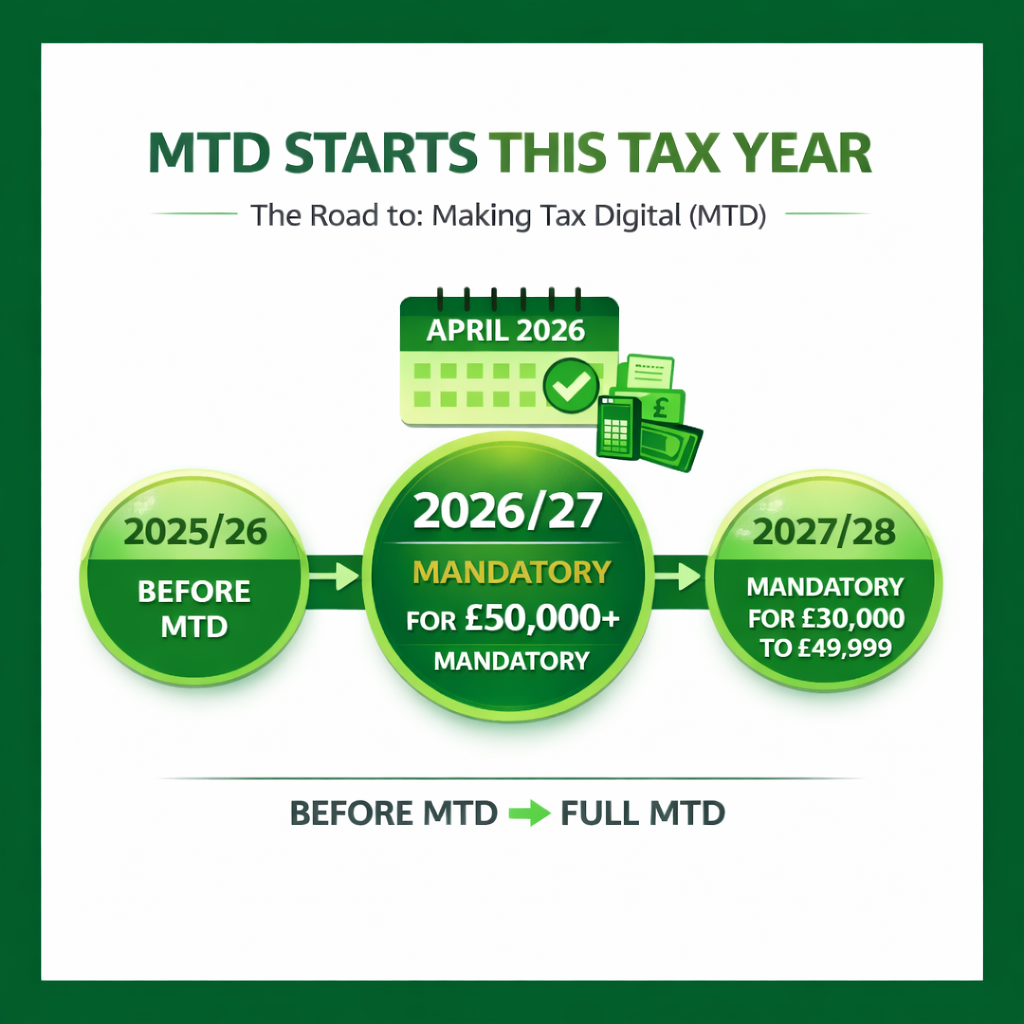
2026/27 - MTD starts now. No more delays
Making Tax Digital isn’t “coming soon” anymore. It’s here.
- No more delays.
- No more gentle encouragement from HMRC to take part.
- No more software trials or optional pilots.
If you’re a sole trader or landlord with income over £50,000, MTD starts this tax year. That means quarterly updates, digital records, and a brand‑new way of reporting your income to HMRC.
But it doesn’t need to be stressful.
At LattaCook, we’ve built everything around making MTD clear, simple, done. You send us your income and expenses — we handle the digital records, the quarterly submissions, and the deadlines.
2026/27 - MTD has officially begun.
Know exactly what happens and when
2026/27 tax year
(Mandatory for £50,000 or more)
MTD for Income Tax becomes mandatory from 6 April 2026 for anyone with qualifying income over £50,000.

Who must follow MTD
- 2026/27 tax year
- Sole traders with income over £50,000
- Landlords with income over £50,000
- Combined income counts (e.g., £32k trading + £20k rental = £52k)

Quarterly submissions & deadlines
- Q1: 6 April 26 → 5 July 26
- Q1 Deadline - Due 7 August 26
- Q2: 6 July 26 → 5 October 26
- Q2 Deadline - Due 7 November 26
- Q3: 6 October 26 → 5 January 27
- Q3 Deadline - Due 7 February 27
- Q4: 6 January 27 → 5 April 27
- Q4 deadline - Due 7 May 27

What you do next
- Keep digital records from 6 April 2026
You must record all business income and expenses using MTD‑compatible software. - Submit your quarterly updates on time
Use the deadlines listed above. - Complete your End of Period Statement (EOPS)
This finalises your business income for the year. - Submit your Final Declaration
This replaces the old Self Assessment return. - If you’re not already doing this — speak to us
We’ll make sure your software, records and deadlines are set up correctly.
Note: HMRC recognises this as a bedding‑in period — there are no penalties for late quarterly submissions during 2026/27 while everyone adjusts.
Start planning now and avoid last minute stress
2027/28 tax year
(Mandatory for £30,000 or more)
This is the next phase of Making Tax Digital. If you fall into this income band, your first mandatory year is 2027/28 — and the smartest thing you can do is start preparing now, not in April 2027.

Who must follow MTD
- 2027/28 tax year
- Sole traders with income over £30,000
- Landlords with income over £30,000
- Combined income still counts (e.g., £22k trading + £20k rental = £42k)

Quarterly submissions & deadlines
- Q1: 6 April 27 → 5 July 27
- Q1 Deadline - Due 7 August 27
- Q2: 6 July 27 → 5 October 27
- Q2 Deadline - Due 7 November 27
- Q3: 6 October 27 → 5 January 28
- Q3 Deadline - Due 7 February 28
- Q4: 6 January 28 → 5 April 28
- Q4 deadline - Due 7 May 28

What you do next
- Start exploring your software options now
- Understand what will be required from 6 April
- Don’t leave it until the deadline
- If you’re unsure — speak to us
We can walk you through what’s required, help you understand your options, and make sure you’re set up well before the rules become mandatory.
Start planning now and avoid last minute stress
2028/29 tax year
(Mandatory for £20,000 or more)
This is the final phase of MTD, which includes anyone earning £20,000 or more. It doesn’t start until 2028/29, so there’s no urgency right now. Still, it’s a good idea to set a reminder to look into it sometime in the next 12–18 months so you’re not rushing later.

Who must follow MTD
- 2028/29 tax year
- Sole traders with income over £20,000
- Landlords with income over £20,000
- Combined income still counts (e.g., £15k trading + £10k rental = £25k)

Quarterly submissions & deadlines
- Q1: 6 April 28 → 5 July 28
- Q1 Deadline - Due 7 August 28
- Q2: 6 July 28 → 5 October 28
- Q2 Deadline - Due 7 November 28
- Q3: 6 October 28 → 5 January 29
- Q3 Deadline - Due 7 February 29
- Q4: 6 January 29 → 5 April 29
- Q4 Deadline - Due 7 May 29

What you do next
This is the final phase of Making Tax Digital. It doesn’t become mandatory until the 2028/29 tax year, so there’s no need to act immediately — but it is sensible to plan ahead.
- Start exploring your software options over the next 12–18 months
- Get familiar with what will be required from 6 April 2028
- Avoid leaving everything until the deadline approaches
- If you’re unsure — speak to us
We can walk you through what’s required, help you understand your options, and make sure you’re set up well before the rules become mandatory
Download your MTD calendars
Add your MTD deadlines directly to Outlook, Google Calendar, Apple Calendar or your phone. Each calendar includes:
- All quarterly deadlines
- 7‑day reminder events
- Quarterly period ranges
- Final Declaration date
- LattaCook contact details if you need help
Chose the tax year that applies to you:
How to add these calendars
Outlook (Web or Desktop)
- Open Outlook Calendar
- Select Add calendar
- Choose Upload from file
- Select the .ics file
- Choose Create new calendar
Google Calendar
- Open Google Calendar
- On the left, click the + next to “Other calendars”
- Select Import
- Choose the .ics file
- Select Add as new calendar
iPhone / IPad
- Email the .ics file to yourself
- Tap the attachment
- Tap Add All
- Choose a calendar
What you're downloading
Each calendar gives you:
- Clear quarterly periods (e.g., Q1: 6 Apr → 5 Jul)
- The official HMRC deadline (e.g., 7 August)
- A reminder 7 days before
- A Final Declaration reminder
- A simple description with a link back to LattaCook if you need support
This keeps your MTD obligations organised and visible — without you needing to check the website every quarter.